
~100,000 years ago
Old Fuji (Ko-Fuji) begins building on top of an even older volcano (Komitake). The cone we see today is geologically young.
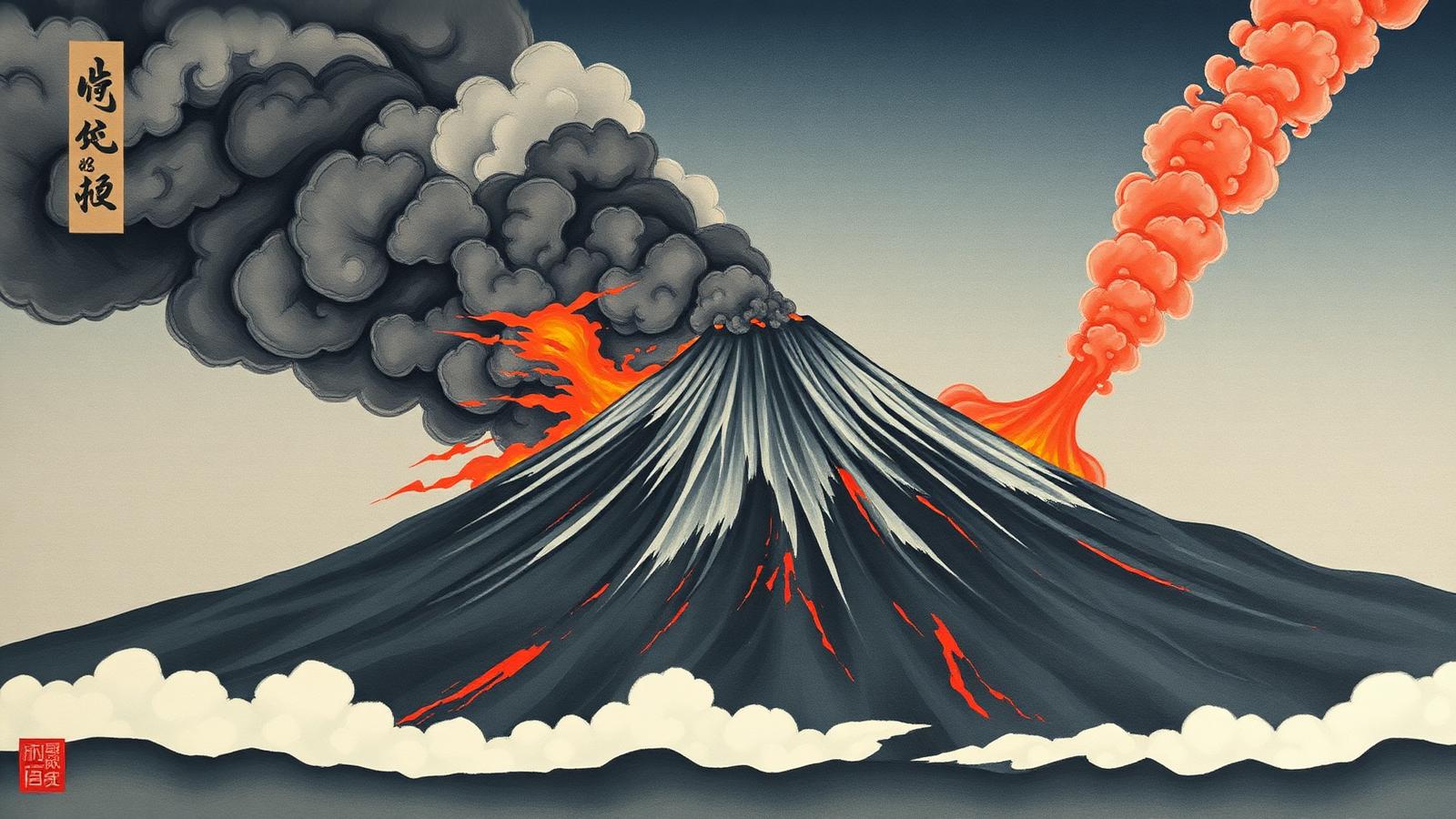
Volcano
Mount Fuji is the most active stratovolcano on Honshu. Its last eruption in 1707 shaped the land you walk on today - the lava fields beneath Aokigahara, the Hoei crater on the south flank and the dust still mixed into Tokyo soil.
Old Fuji (Ko-Fuji) begins building on top of an even older volcano (Komitake). The cone we see today is geologically young.
The Jogan eruption. Lava flows from the north-west side dam the ancient Senoumi lake, splitting it into Lake Sai and Lake Shoji. The flows cool into the Aokigahara forest field.
The most recent eruption. A flank vent opens on the south-east slope. Ash falls as far as Edo (Tokyo). The Hoei crater is still visible from Gotemba.
Increased seismic activity after the Tohoku earthquake. Fuji is classified as an active volcano. No eruption has occurred, but evacuation plans were updated in 2023.
Yes. The Japan Meteorological Agency runs the Volcanic Alert Level system and Fuji currently sits at Level 1 (normal). Visitors are warned only if levels rise. We track JMA seismicity on our earthquakes page.