
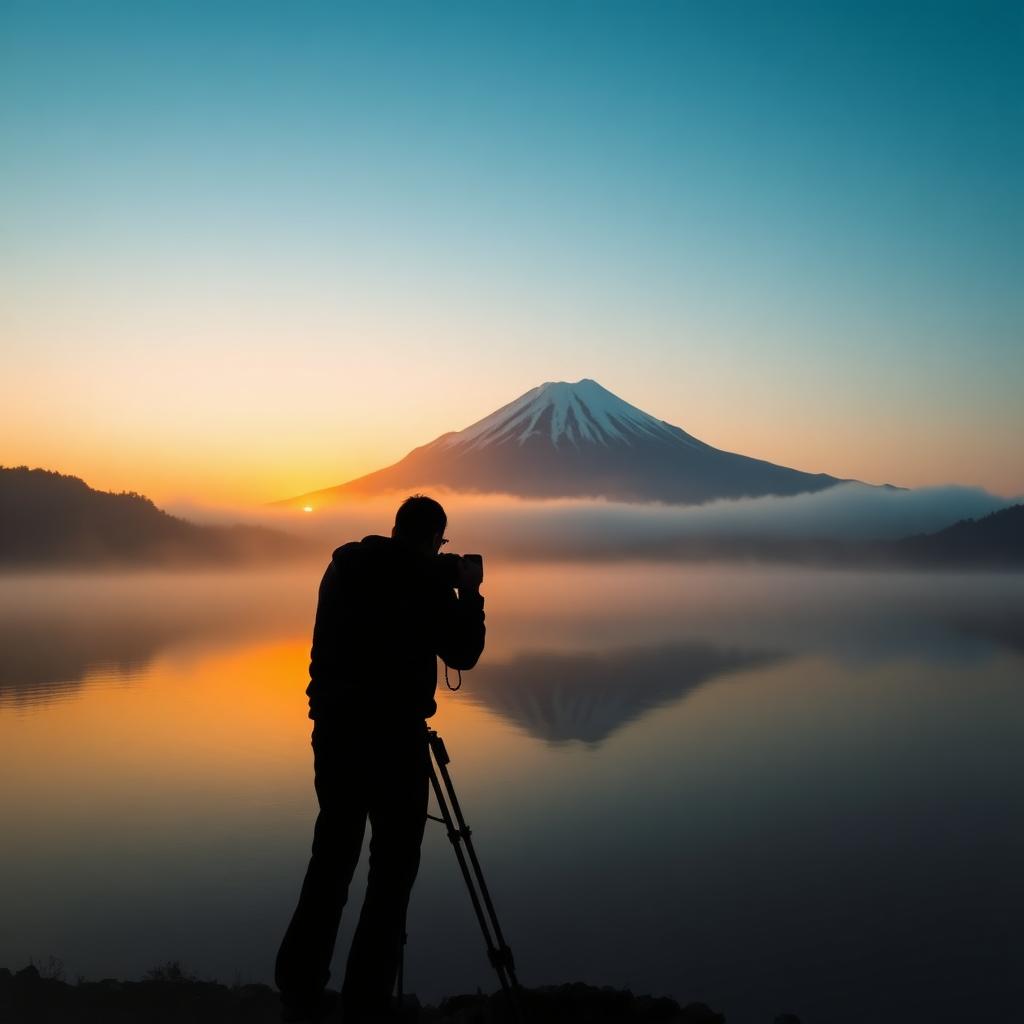
Reflection (sakasa Fuji)
Calm dawn at Lake Kawaguchi north shore, Lake Yamanaka east shore or Lake Tanuki. Wind picks up after 8 am, so arrive before sunrise.
For photographers
What to shoot, when to shoot it and what to bring. The mountain is hidden behind cloud most of the year, so timing matters more than gear.
Calm dawn at Lake Kawaguchi north shore, Lake Yamanaka east shore or Lake Tanuki. Wind picks up after 8 am, so arrive before sunrise.
Late summer dawn when low sun lights the unmelted east face red. Made famous by Hokusai. Best from Yamanaka and Motosu in August.
Sun aligned with the summit at sunrise or sunset. Two narrow windows per location per year. Telephoto 200 to 400 mm, fast shutter, dial in exposure for the sun disc.
Five storey pagoda with Fuji and cherry blossom or autumn maple in frame. 24 to 70 mm at f8, polariser to deepen the sky.
December to April. Polariser cuts haze, telephoto compresses Fuji into the city or lake foreground.
Two lenses cover almost everything: a 24 to 70 for wide reflections and pagoda compositions, and a 70 to 200 (or 100 to 400 for Diamond Fuji) for compressed cityscape and crater detail. Add a sturdy tripod for blue hour, a circular polariser for haze and a remote release.