
Summer summit
5-8 °C at sunrise in August. Wind chills it to near freezing. Wear a warm layer even in the height of summer.
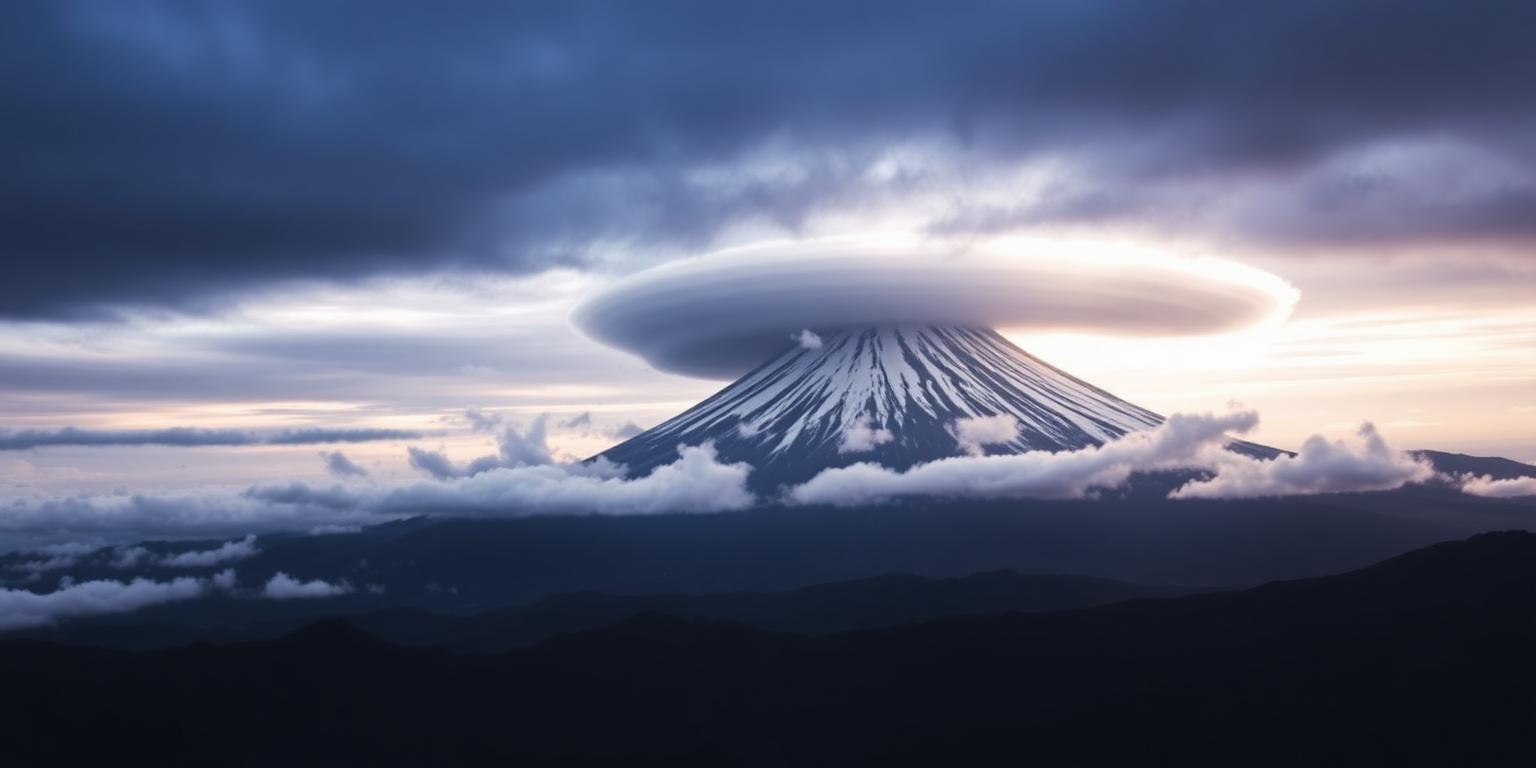
Weather
Fuji creates its own weather. Cloud caps, lenticular UFOs, summit windstorms, all from the same isolated cone. Here is what to expect through the year.
| Month | Visibility | Conditions |
|---|---|---|
| January | Excellent | Cold and dry, sharp visibility. Summit -18 °C average. |
| February | Excellent | Coldest month. Snow cap fully formed. Summit -19 °C. |
| March | Good | Cold mornings, hazier afternoons. Snow still on top. |
| April | Mixed | Spring haze rises. Mornings clear, sakura season. |
| May | Mixed | Warmer, more cloud. Shibazakura peak around the foot. |
| June | Poor | Rainy season. Often hidden for days at a time. |
| July | Fair | Climbing season opens. Mornings best, afternoons cloud up. |
| August | Fair | Peak climbing season. Humid, thunder risk by afternoon. |
| September | Good | Climbing closes mid-month. Typhoon risk early, clearer late. |
| October | Good | Autumn arrives, air dries out. Snow returns by month end. |
| November | Excellent | First full snow cap. Stable high pressure days. |
| December | Excellent | Cold, dry, statistically the clearest month from Tokyo. |
5-8 °C at sunrise in August. Wind chills it to near freezing. Wear a warm layer even in the height of summer.
-18 to -25 °C. Hurricane-force winds common. Off-limits to untrained climbers.
A lens-shaped cloud over the summit forecasts rain within 12 hours. Old Japanese saying that still holds.
Our live forecast page pulls Open-Meteo data in 3-hour steps with a viewpoint-specific visibility score, so you know whether tomorrow is worth the trip.