
Lake Kawaguchiko, north shore
The classic frame. The sun drops to the right of the cone in summer and behind the ridge line in winter, with the peak reflected on calm water.
Read more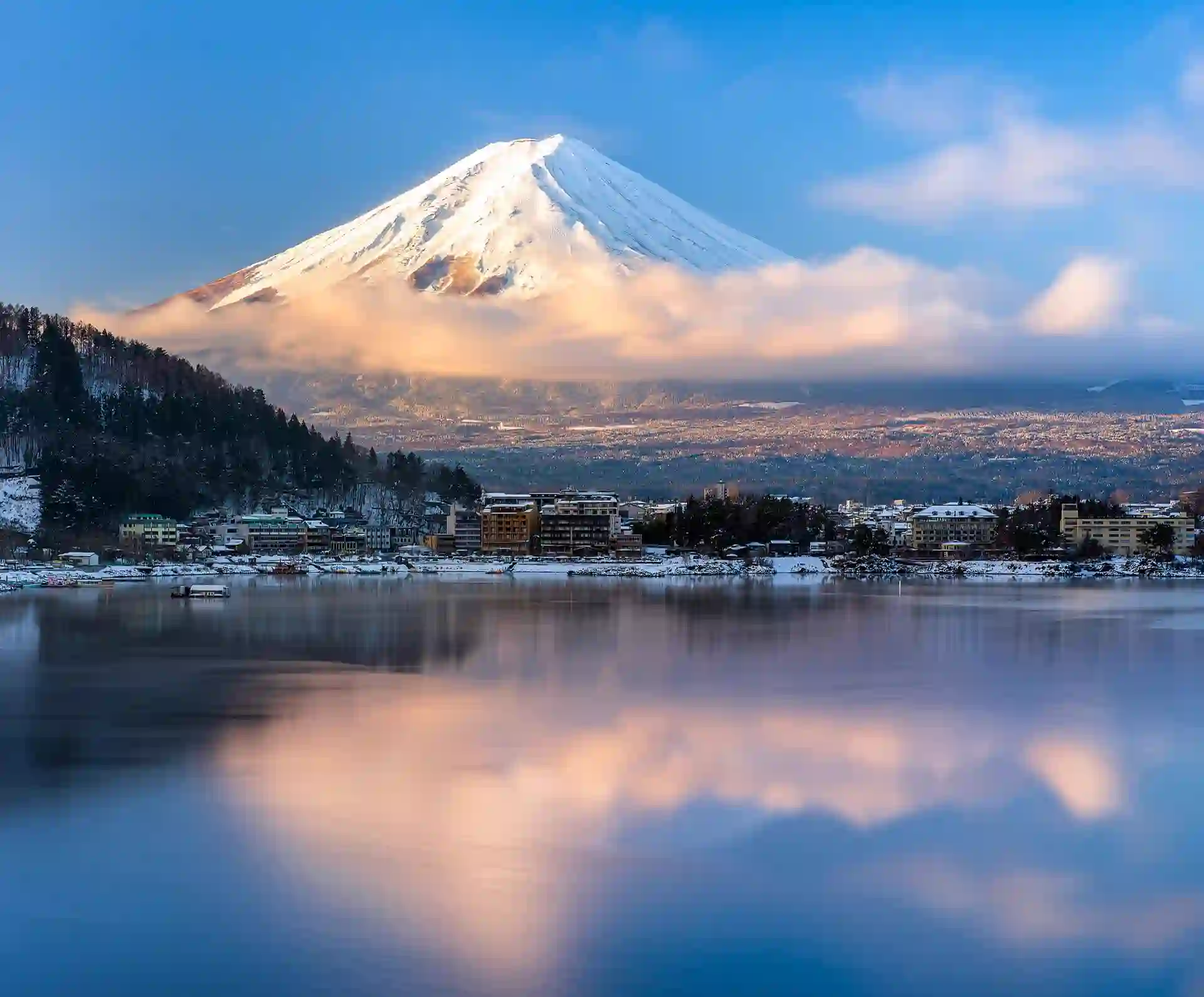
Seeing Fuji
Sunset is the easiest good light of the day to plan for: no 3 am alarm, and the mountain often clears in the late afternoon as daytime cloud collapses. Here is where to stand, when to arrive and what the light does.
The classic frame. The sun drops to the right of the cone in summer and behind the ridge line in winter, with the peak reflected on calm water.
Read moreWide open eastern shore with the longest afterglow, and the best place in the Five Lakes for a winter Diamond Fuji at sunset.
Read moreThe 1000 yen note view. Quiet, high and dark, so it flows straight from sunset into stargazing.
Read morePine grove and sea in the same frame as the mountain, with the sun setting over Suruga Bay to the west of the cone.
Read moreFrom the western side of Tokyo the cone turns to a black silhouette against an orange sky, most reliably from late autumn to early spring.
Read moreWest side elevation, sunlit slopes right up to the last minute, and space to set up a tripod without crowds.
Read moreSunset around Mount Fuji falls near 19:00 Japan time in midsummer and closer to 16:40 in December, so a winter viewing trip needs a much earlier start than people expect. Exact times, along with the sunrise equivalents, are on our sun times page.
Late autumn and winter give the clearest air and the highest chance of a sharp silhouette. Summer afternoons are often hazy, but summer is also the only time you get red Fuji, so a hazy season is not a wasted one.
Before you commit to a drive, check the live visibility score on the home page and the cloud outlook on the forecast. If cloud is sitting on the summit, the lake shores still work as a fallback and the live cameras will show you within seconds whether it is worth leaving.